Squad
A women's health & wellness mobile application
In a nutshell
Key Themes
Generative UX Research, UI Design Patterns, Mobile Prototyping (Figma)
Project Summary
Design a mobile application on the topic of health & wellness, applying UX methodologies learnt in the first two weeks at General Assembly.
Role
UX Researcher
UI Designer
UX Methodologies
User Research
Affinity Mapping
User Journey Map
Wireframing & Prototyping
Usability Testing
Timeline
2 Week Design Sprint
June 2023
General Assembly Coursework
Tools
Figma, Figjam
Methodology
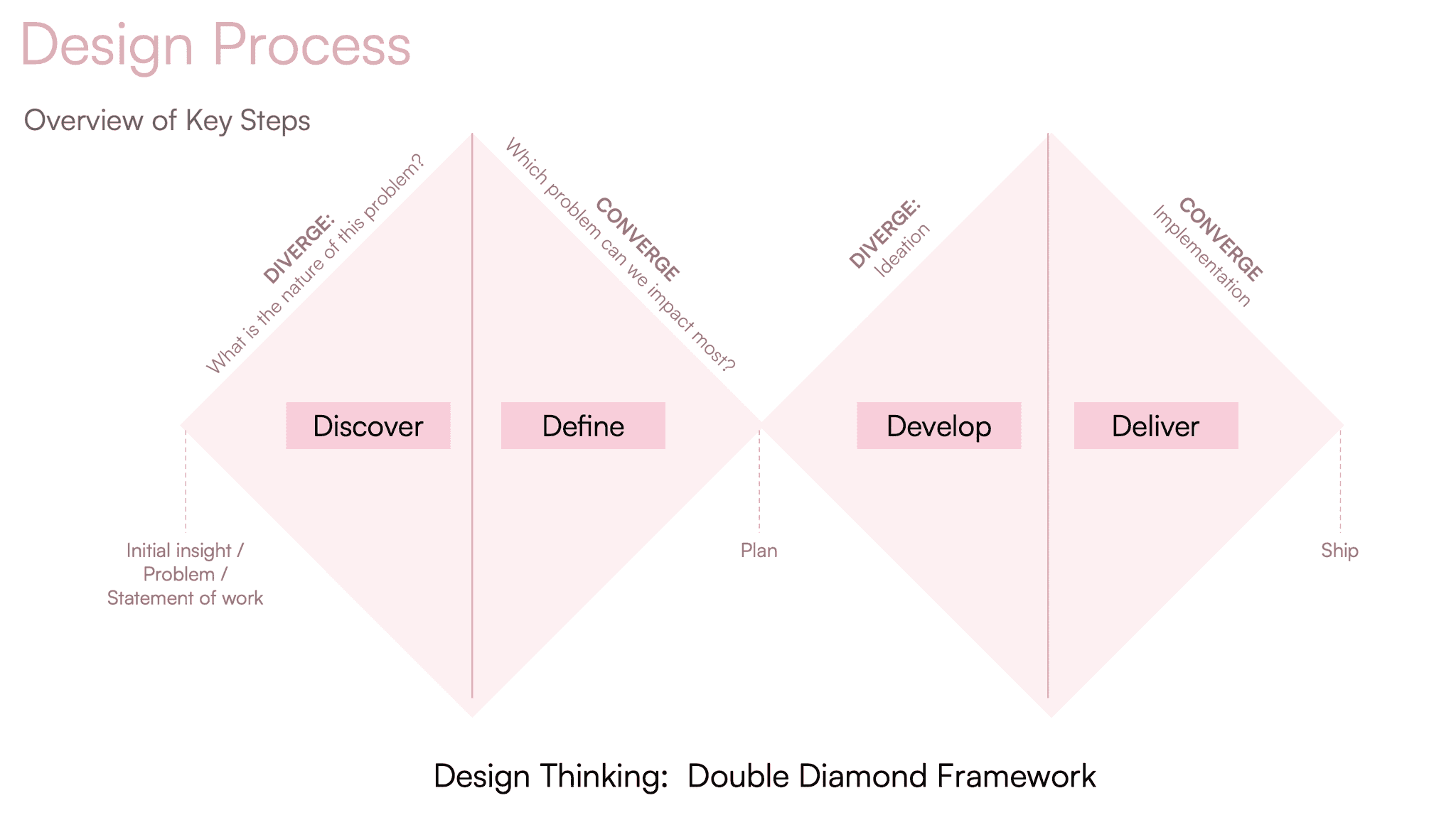
Project Highlights
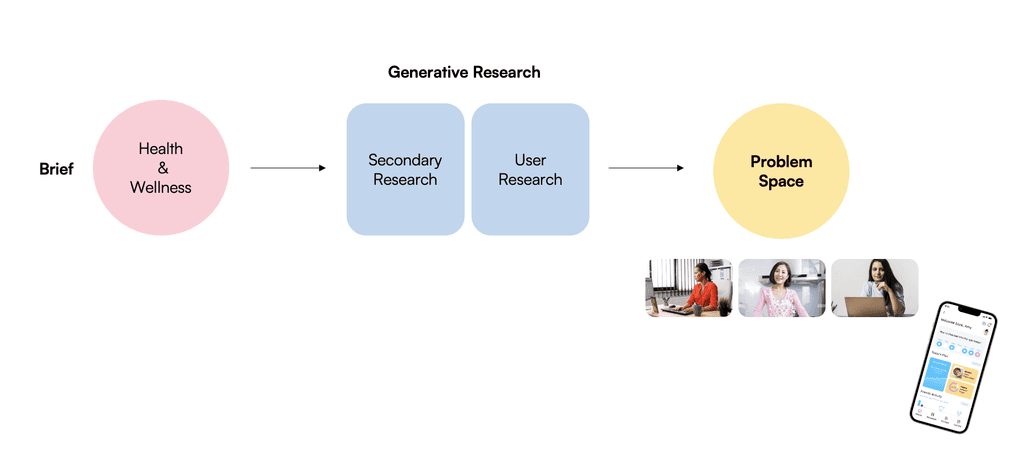
A key highlight of this project was learning to work with wide and ambiguous parameters of designing a mobile application on the topic of health and wellness. Generative research was absolutely key in narrowing our scope down to a distinct problem space. Our final product is Squad, a conceptual mobile application targeted at women seeking to integrate healthy lifestyle practices more consistently in their day-to-day, in order to progress toward their wellness goals. Our solution incorporates purposeful usage of gamification and community elements to target the human behavioural elements embedded in our problem scope.
Phase 1: Discover
Given the topic of health and wellness, the discovery stage of our design process started with initial generative research to define the contours of our overall problem space. Our team of 3 conducted 1) desk research on industry trends and competitors as well as 2) five interviews with our target audience of women aged between 25 to 60. Following our research efforts, we then synthesised our insights so as to identify key themes and user profiles to tailor our design efforts toward.
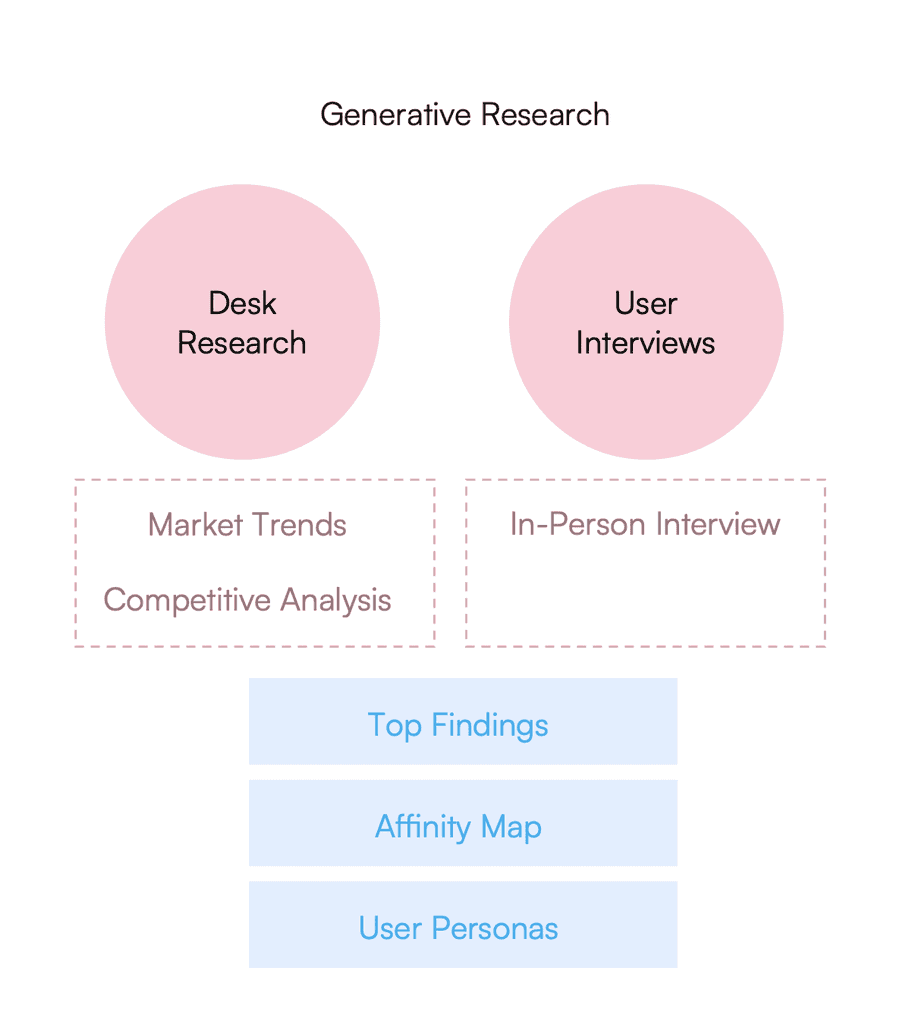
Desk Research
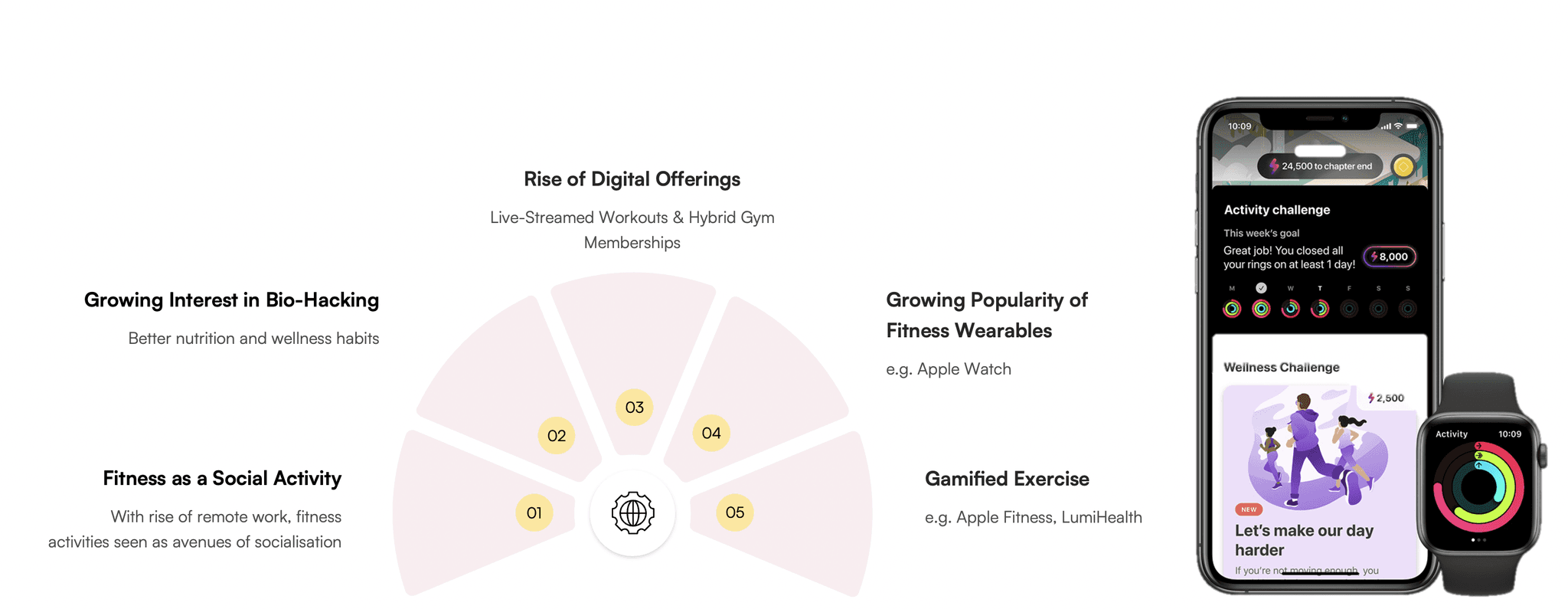
As part of our desk research, we considered major trends in the health and wellness space. Some of these included the rise of fitness as a social activity as remote or hybrid work arrangements became the norm, as well as the growth of digital workout offerings that was kickstarted by the onset of the pandemic in 2020. We also noted key players in the mobile application and digital space, for instance LumiHealth and Apple Fitness.
User Interviews
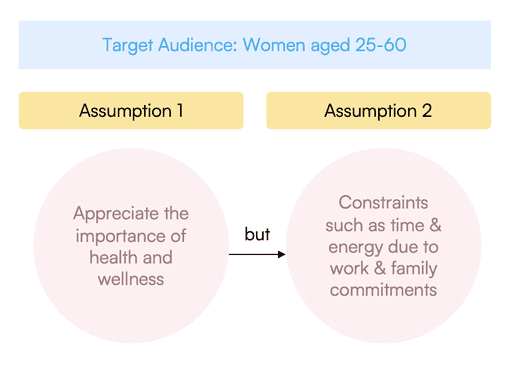
Our hypothesis was that women in the target age range of 25 to 60 would
1) Appreciate the importance of health and wellness, but
2) Face constraints in time & energy due to work and family commitments.
Affinity Map
With the help of the affinity diagram, we synthesised the key themes from our user interviews. Overall, we were able to gather insights on topics such as our interviewees' 1) attitudes toward health and fitness 2) current physical activity levels and nutrition practices 3) motivating factors 4) barriers and constraints to integrating health and wellness habits into their lifestyles.
Attitudes
I never specifically look into my health, but I am aware people of my age are starting to prioritise it.
I know health and wellness is important, but I don't really have the time to incorporate it into my lifestyle.
Diet & Nutrition Practices
I do not monitor my food intake. Rather, I try to just avoid unhealthy food items.
I like to have easy-to-prepare meals, and I try to moderate my food portions
Physical Activity Level
I aim to engage in moderate exercise outdoors 2-3x a week.
I like to go for studio classes as they are fun.
I like to do short YouTube workout videos.
Constraints
I have limited time & energy.
I don't have the bandwidth to consider all the logistics.
I lack the social pressure and conducive environment
Motivating Factors
Knowing how much calories I burn daily helps me to keep myself in check.
I am motivated by peers, timely reminders and progress tracking.
Phase 2: Define
We were able to distill as many as three user personas from our interviews, two of which challenged our initial assumptions. Each persona faces a different primary barrier to integrating health and wellness practices into their lifestyles.
User Personas
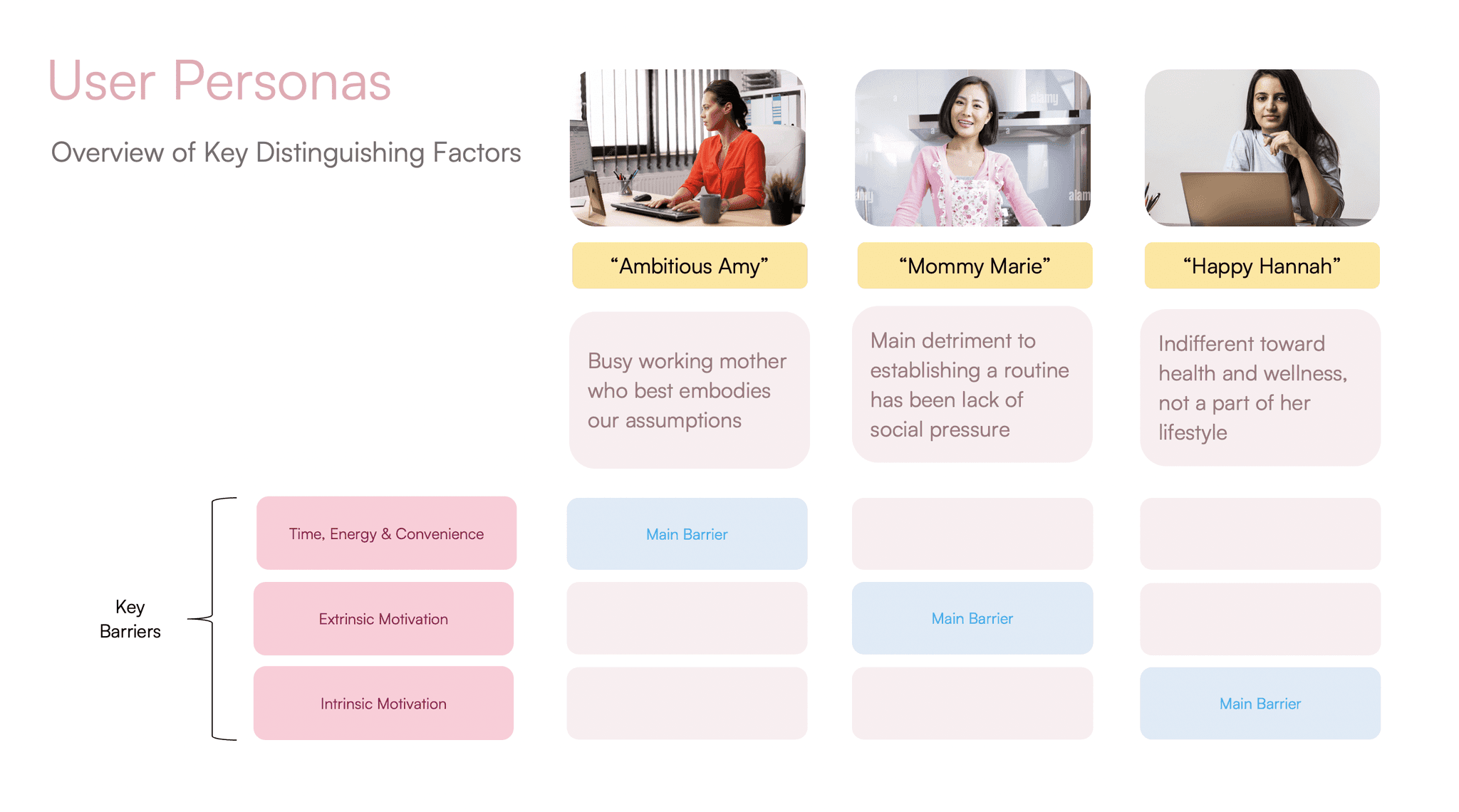
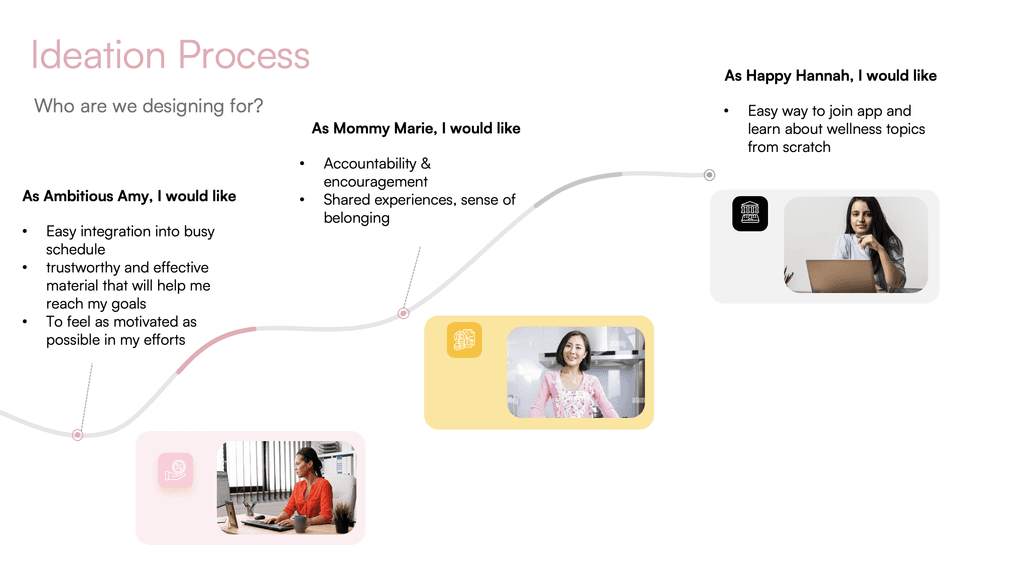
With our research insights, we could then define clear objectives and scope for design. We constructed problem statements for each persona and correspondingly, came up with ideas on features that would cater to each persona.
Problem Statements
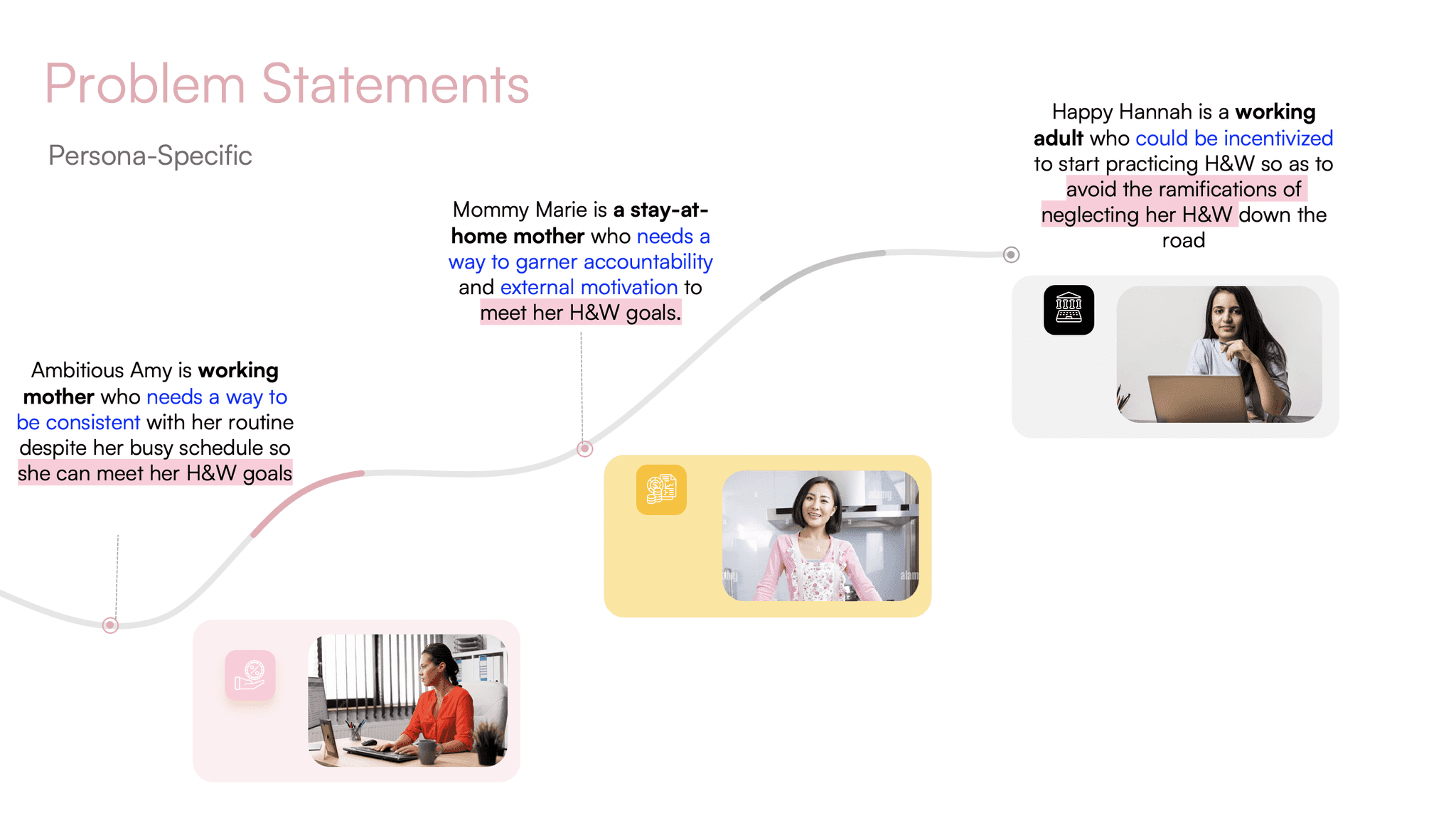
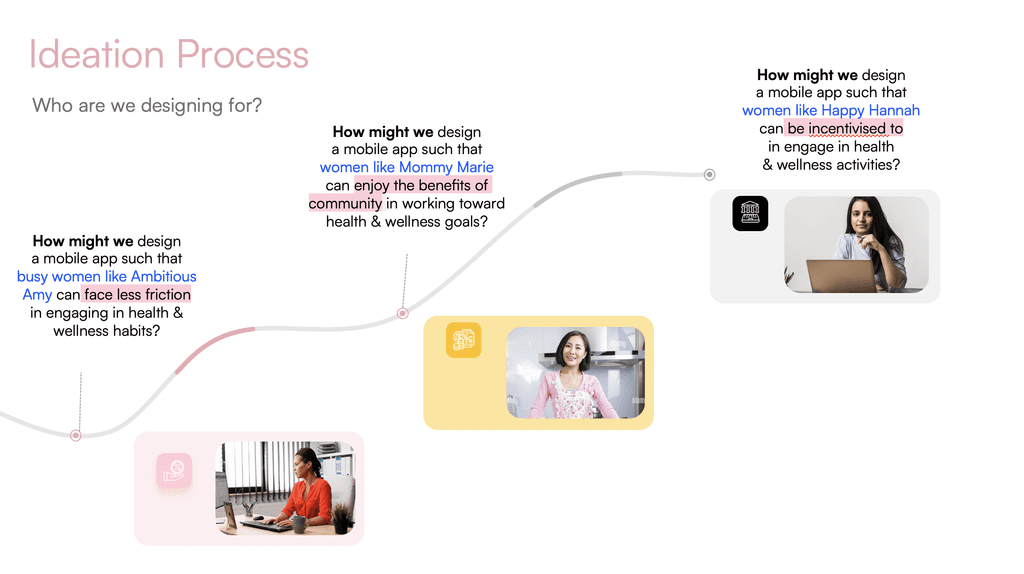
Swipe to see HMW statements and features that cater to the different user stories.
Phase 3: Develop
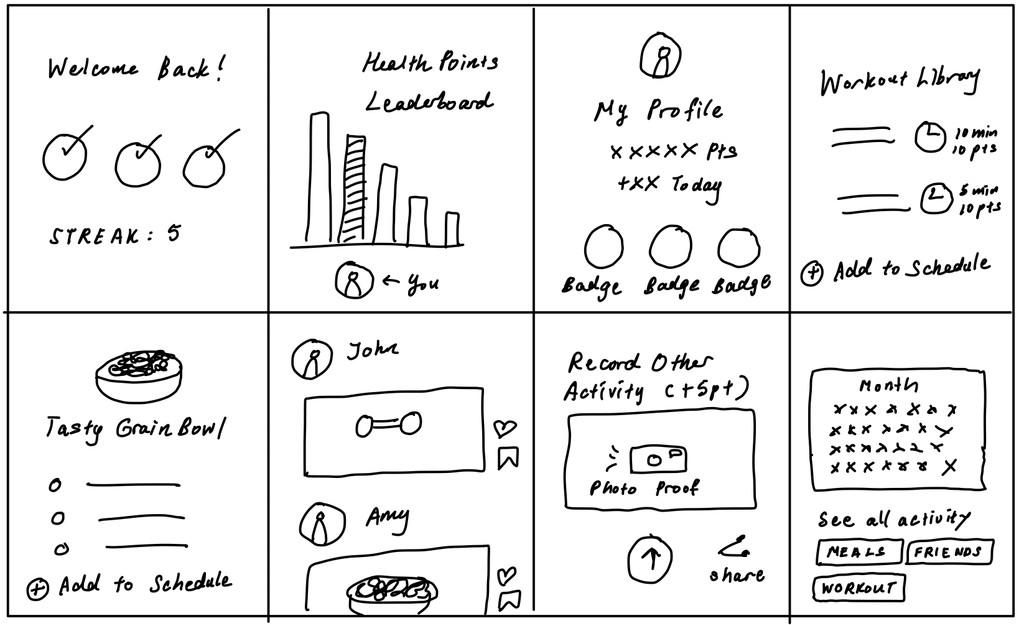
During this stage, our scope once again diverged with the purpose of coming up with as many ideas as possible given our target problem space.
User Journey Map
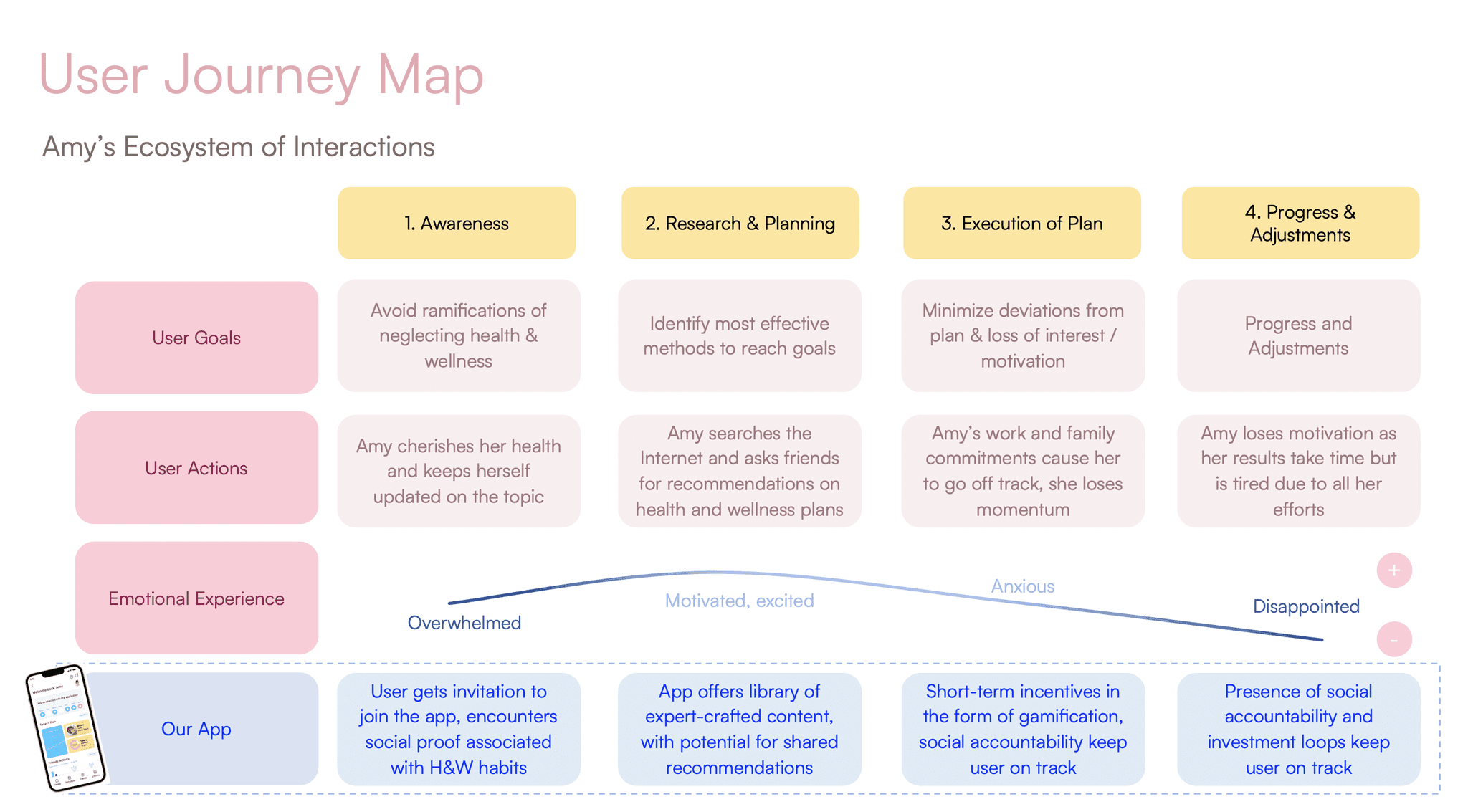
To better capture the opportunities for our solution to address our users' pain points, a user journey map helped to visualise the different phases of the user journey and the typical user actions, goals and emotional experience.
Feature Prioritisation
Crazy Eight's Exercise
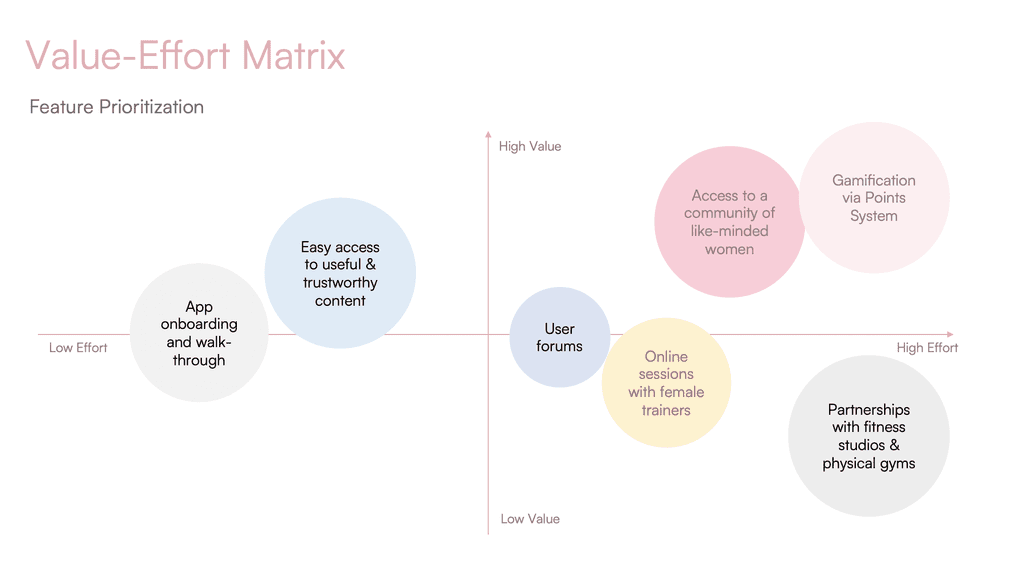
Due to our multiple personas, it was tempting to introduce features to address the whole gamut of needs. Eventually, we decided on several key aspects of the app that would be mutually reinforcing. We stacked these against the value-effort matrix to better visualise the trade-offs involved in proceeding to develop a feature idea.
Sketches & Wirefames
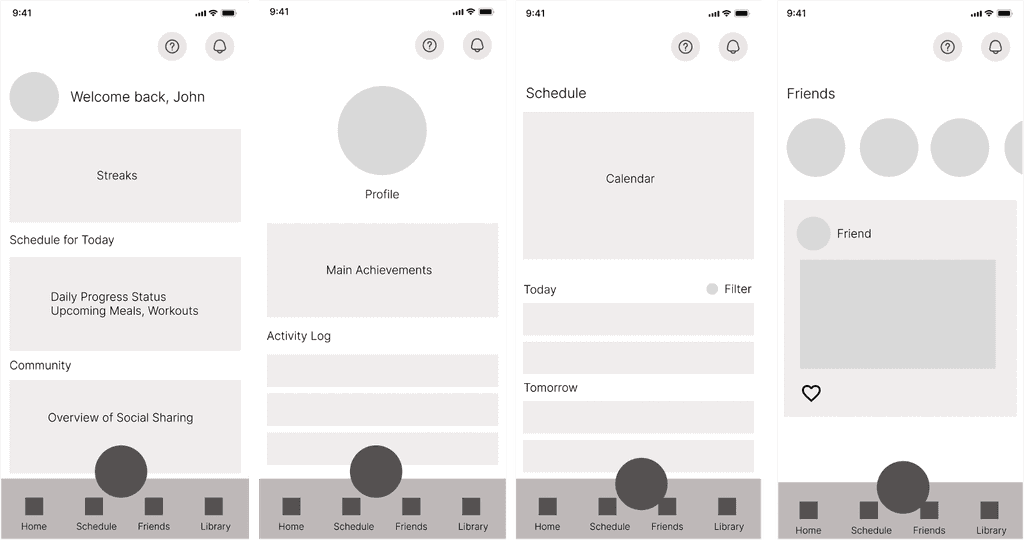
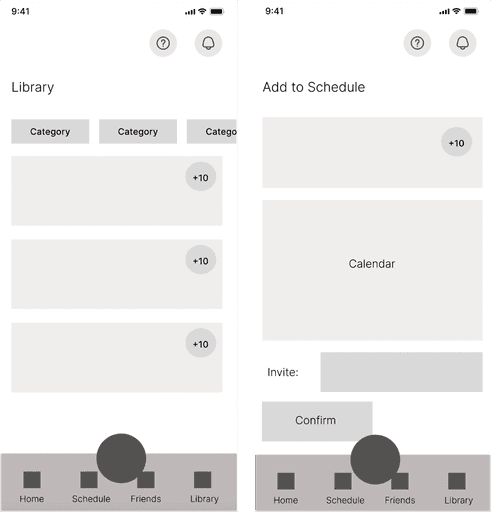
Phase 4: Deliver
Solution Statement
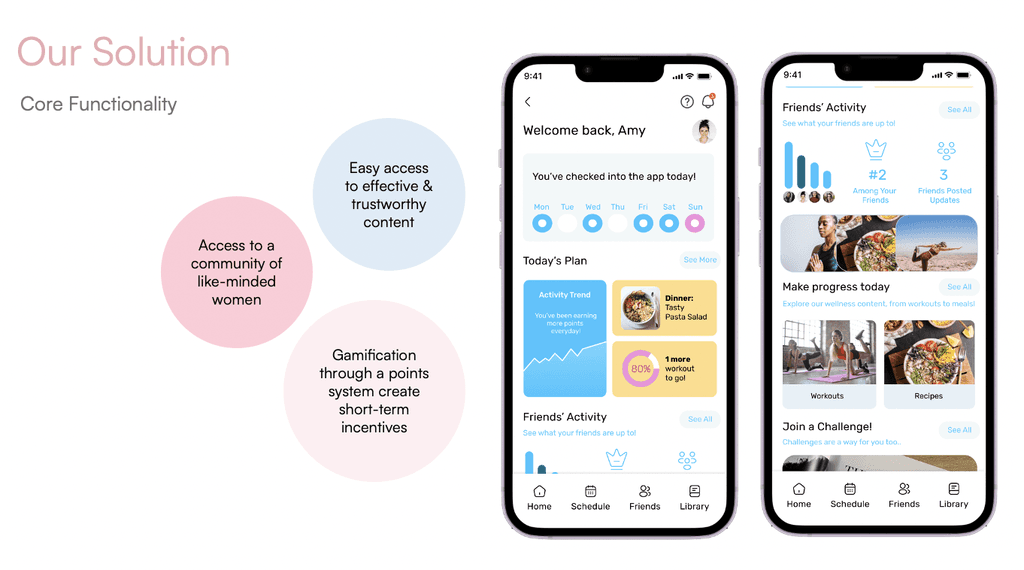
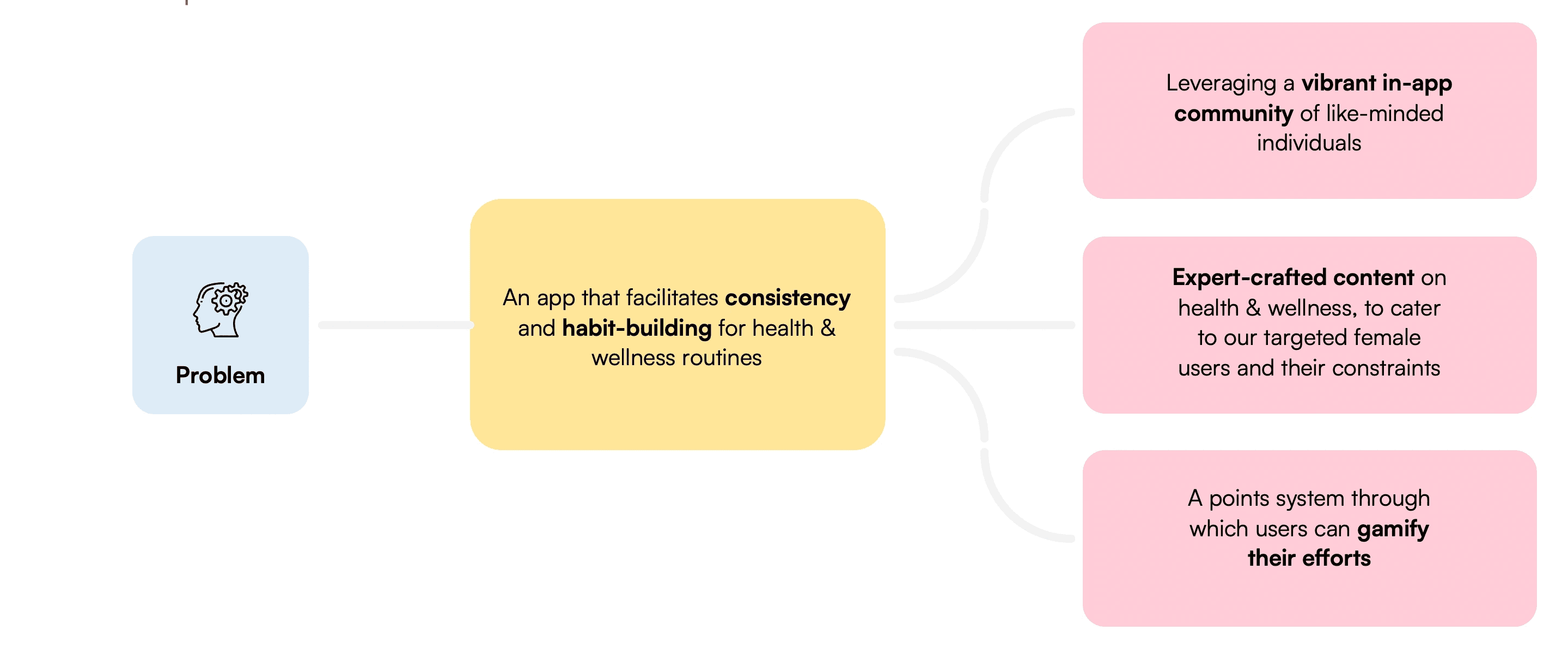
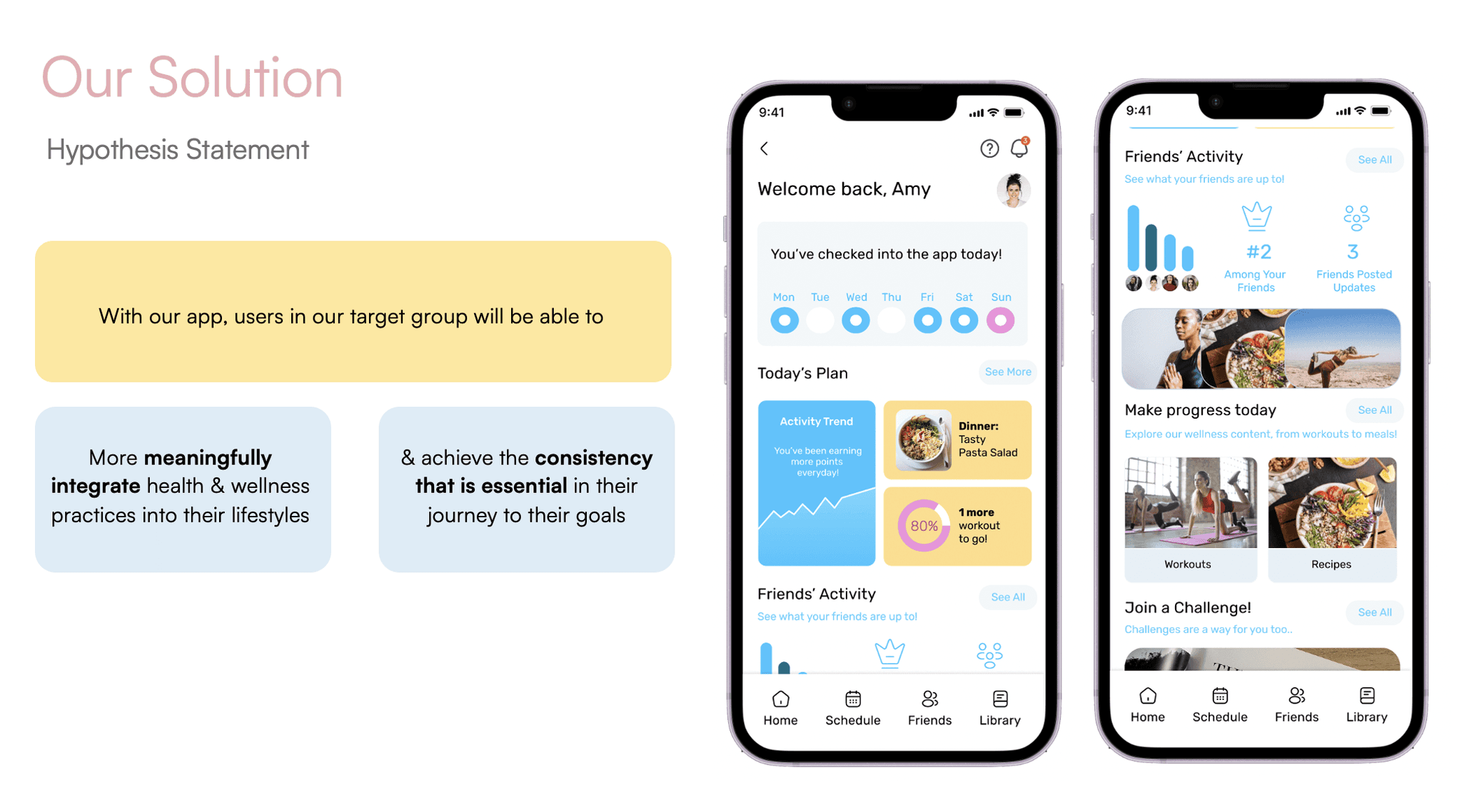
Squad specifically aims to facilitate consistency and habit-building for health and wellness routines by the following:
1) Leveraging an in-app community
2) In-app content tailored to our target users
3) Gamification of user efforts
Design Considerations
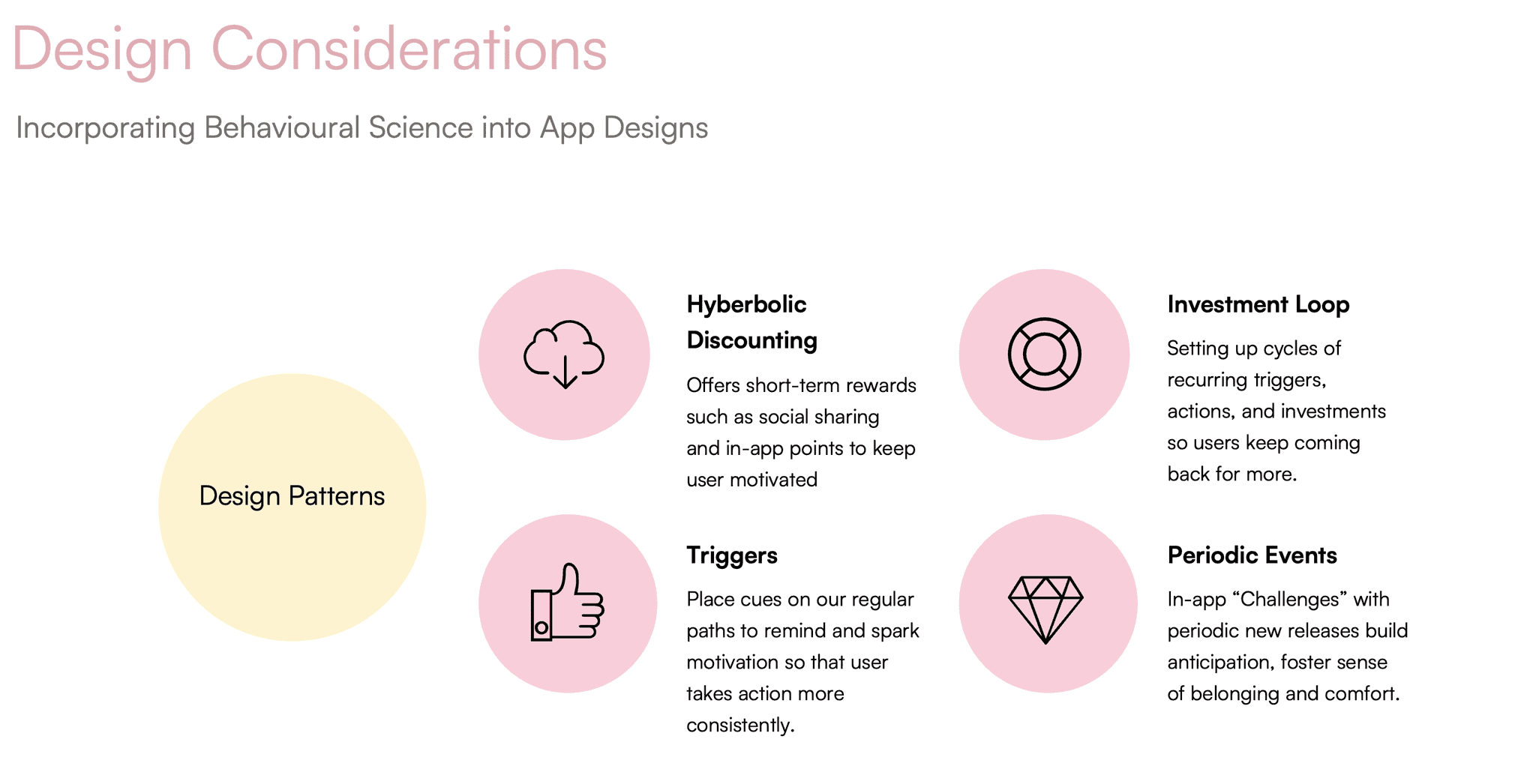
We also incorporated design patterns to maximise user engagement with the mobile app, such as hyperbolic discounting, investment loops, triggers as well as periodic events.
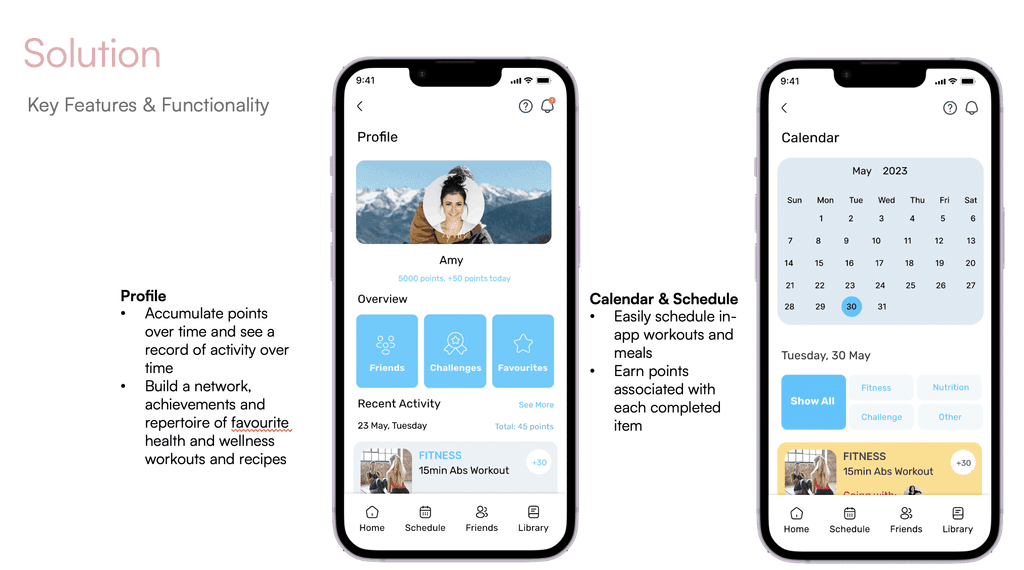
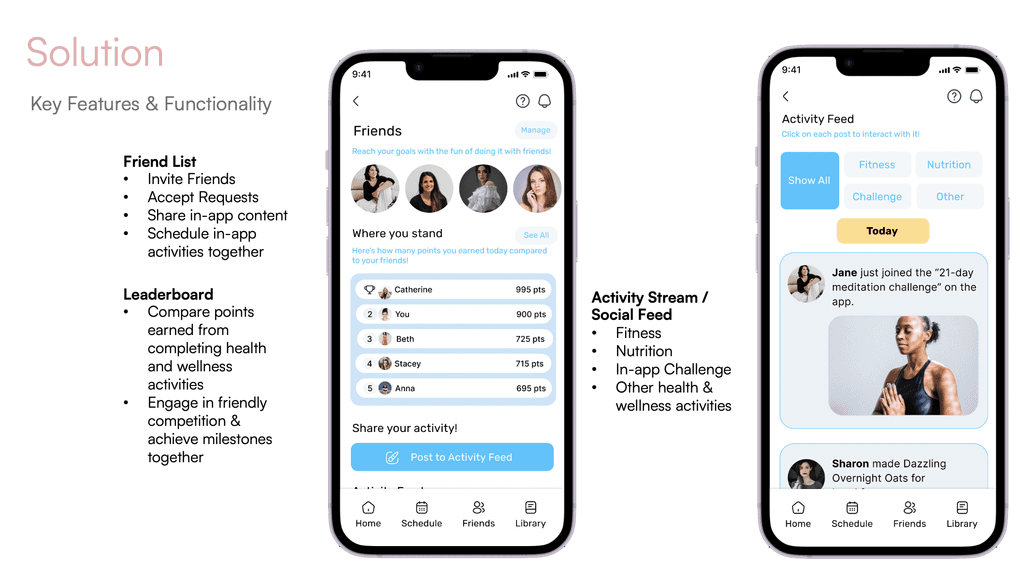
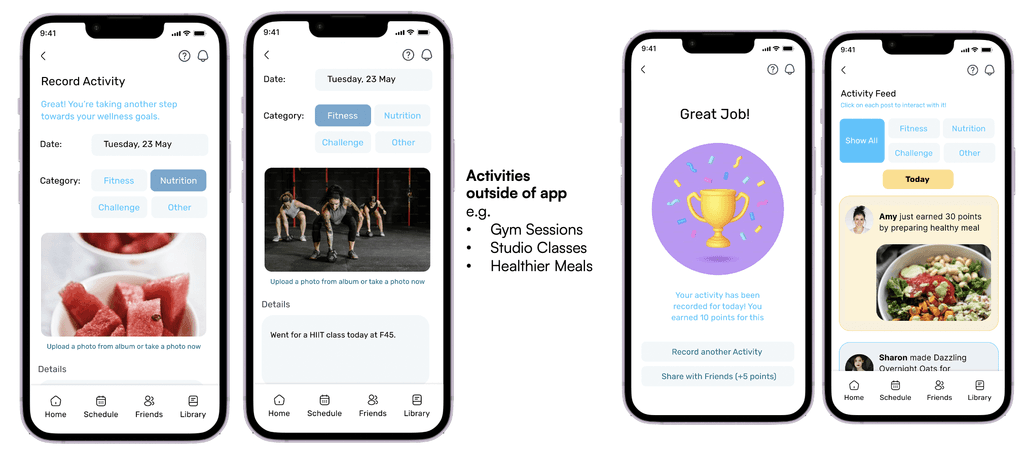
Feature Walkthrough
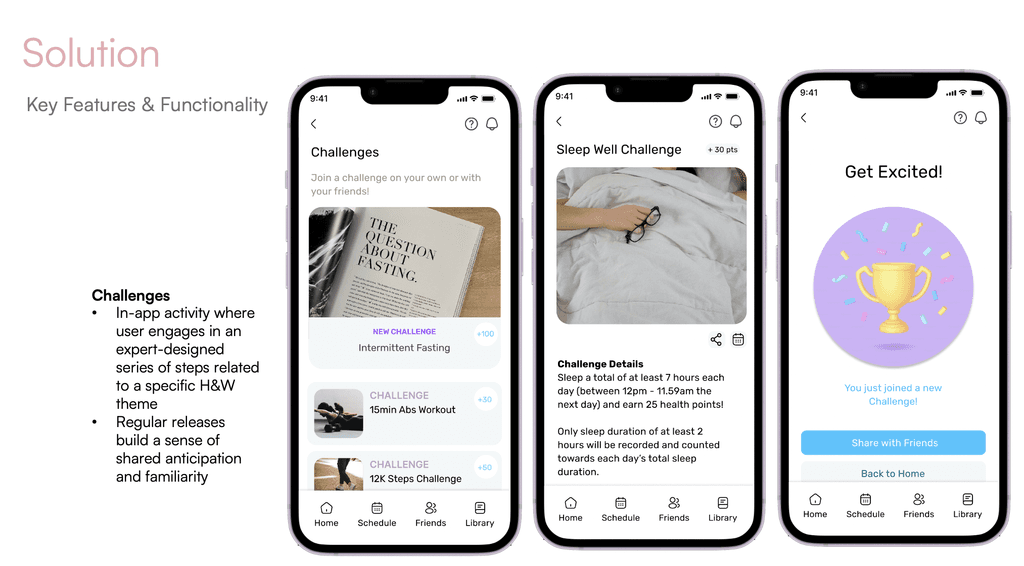
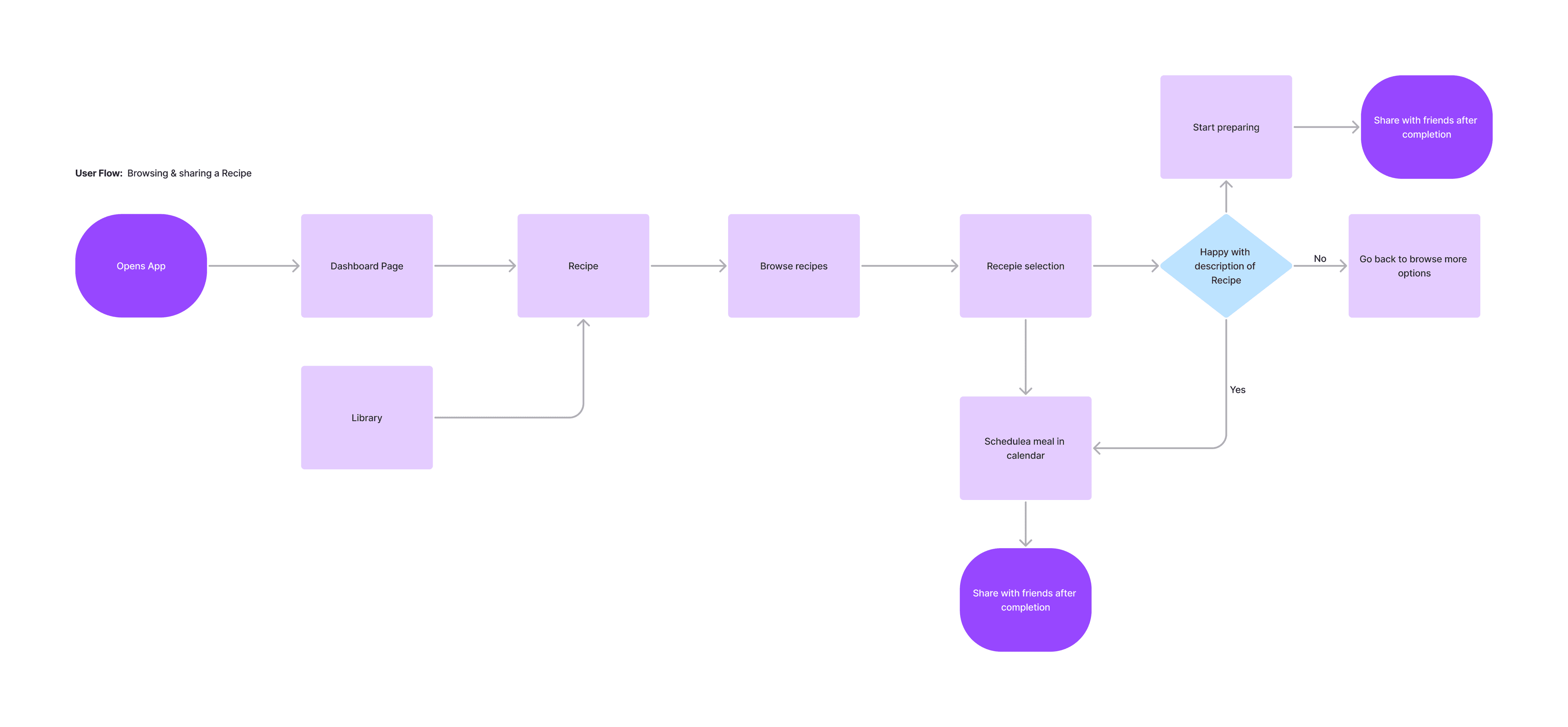
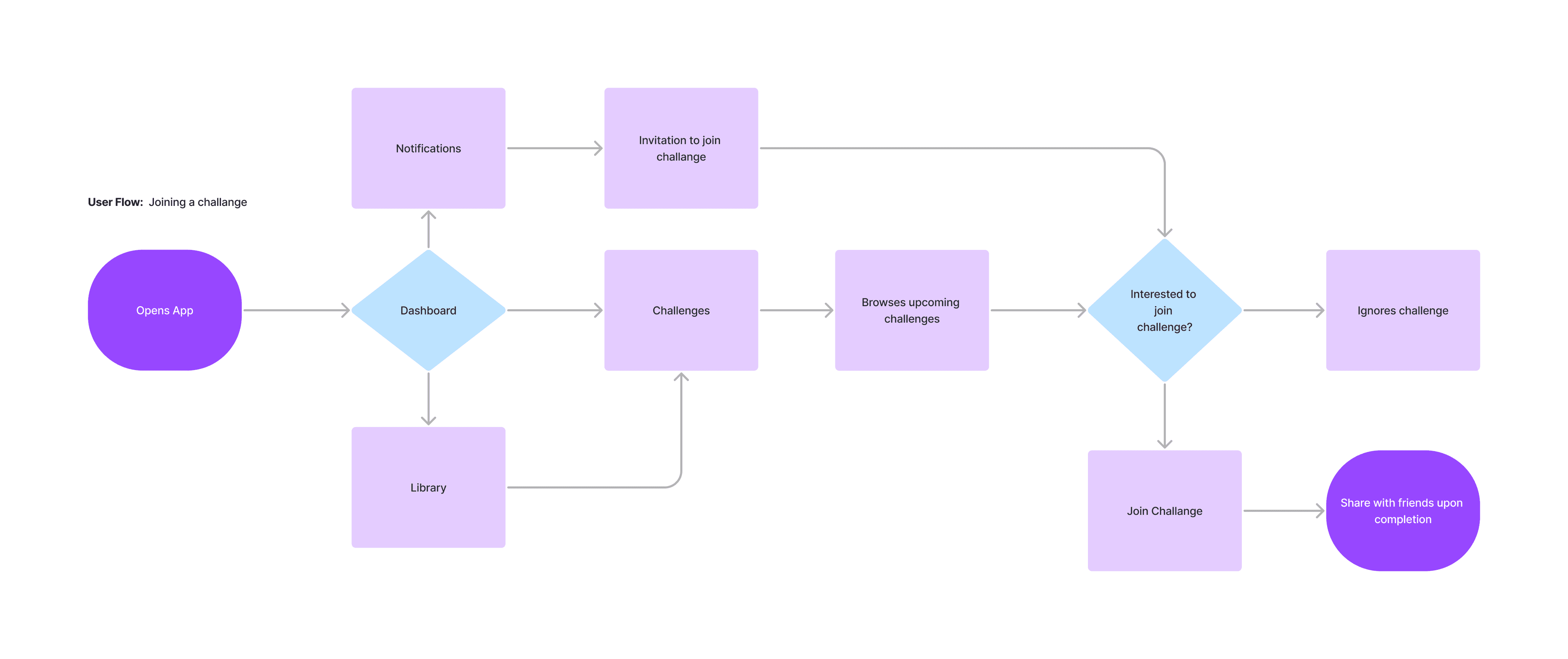
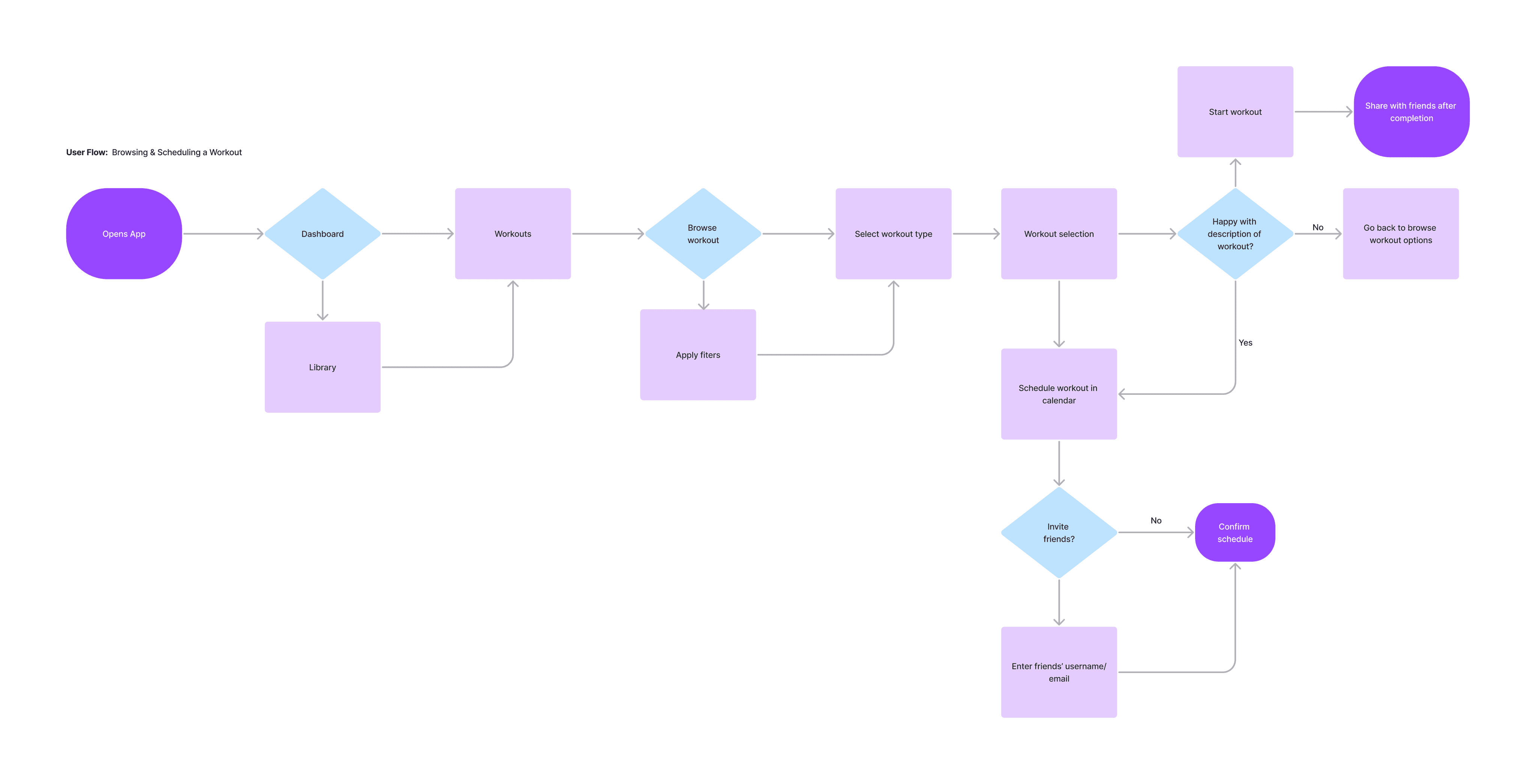
User Flows
Prototype
The final prototype can be accessed at this link.
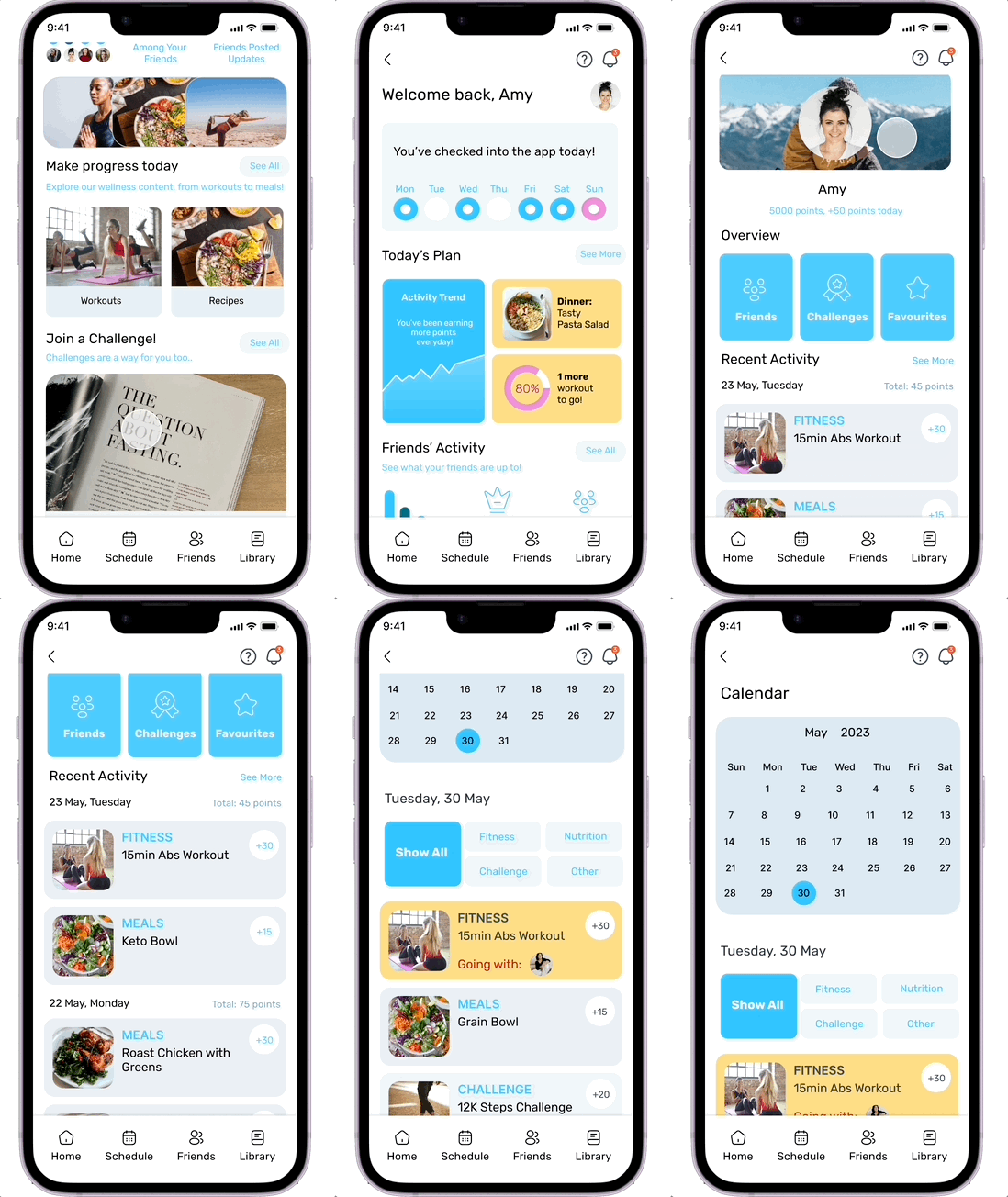
Gamification of Health & Wellness
User can approach building strong healthy habits in a fun manner and track progress either individually or with peers via a points system.
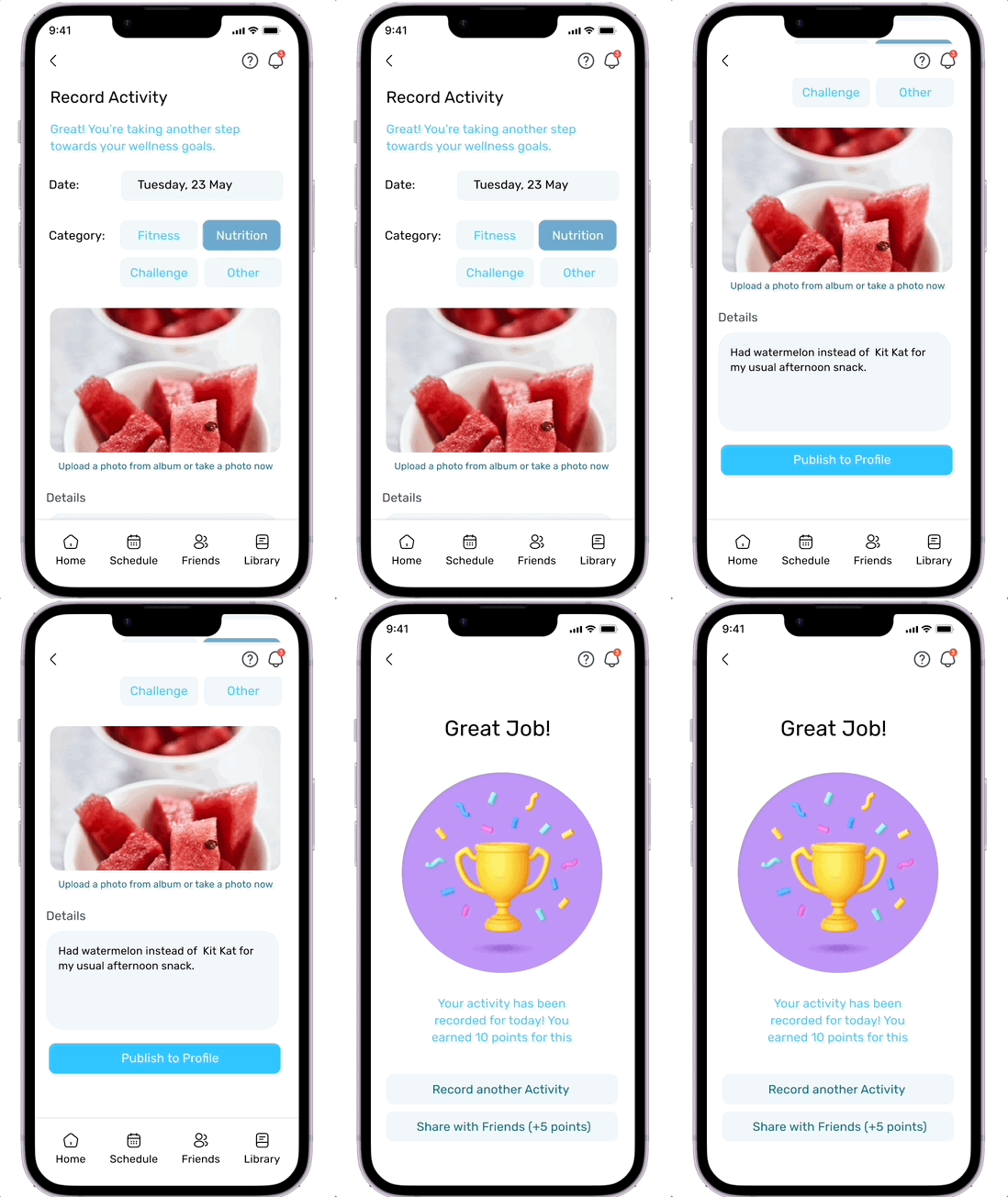
Progress Tracking & Sharing
User can easily share instances in which they have intentionally practiced health and wellness habits.
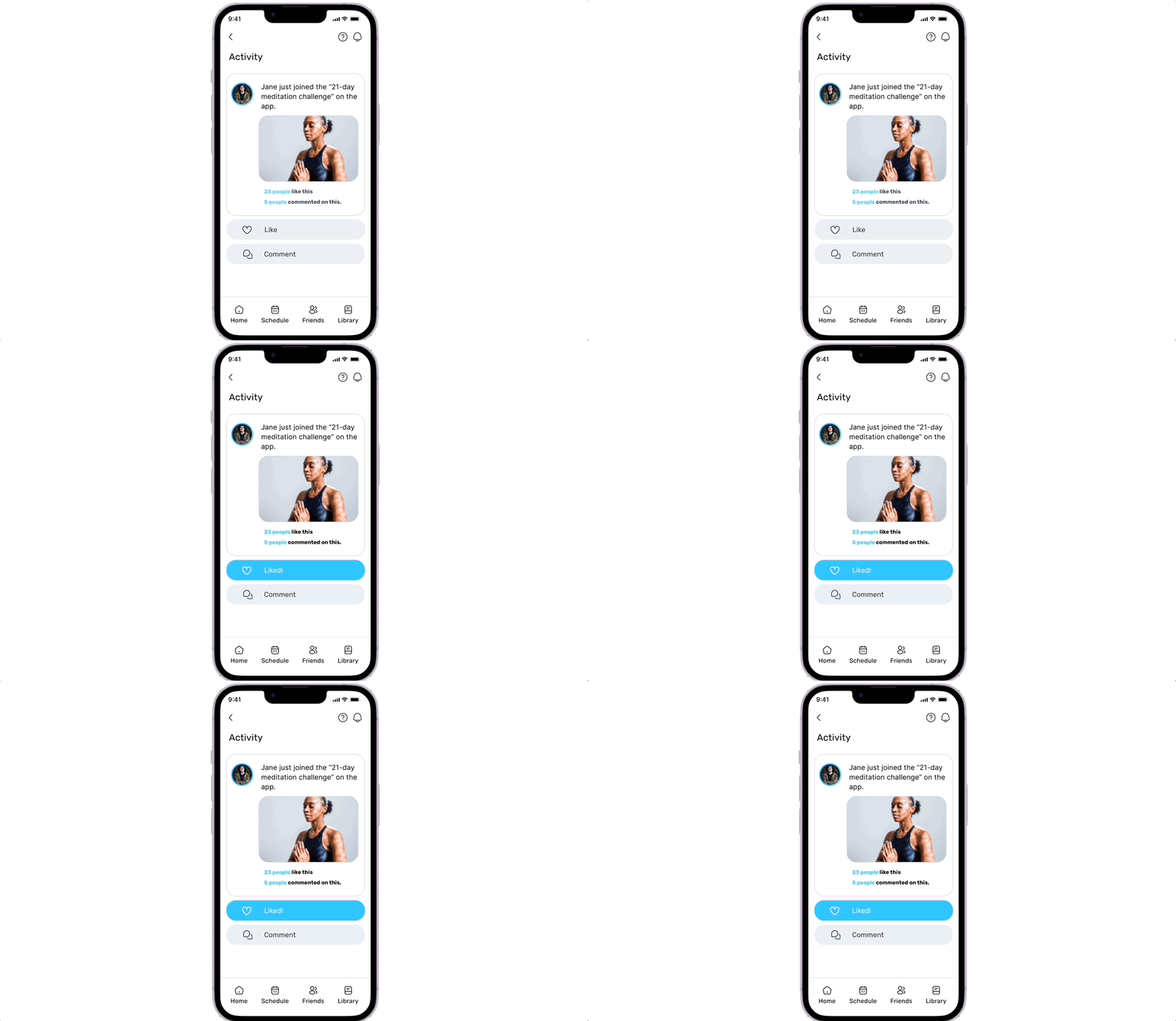
Community Features
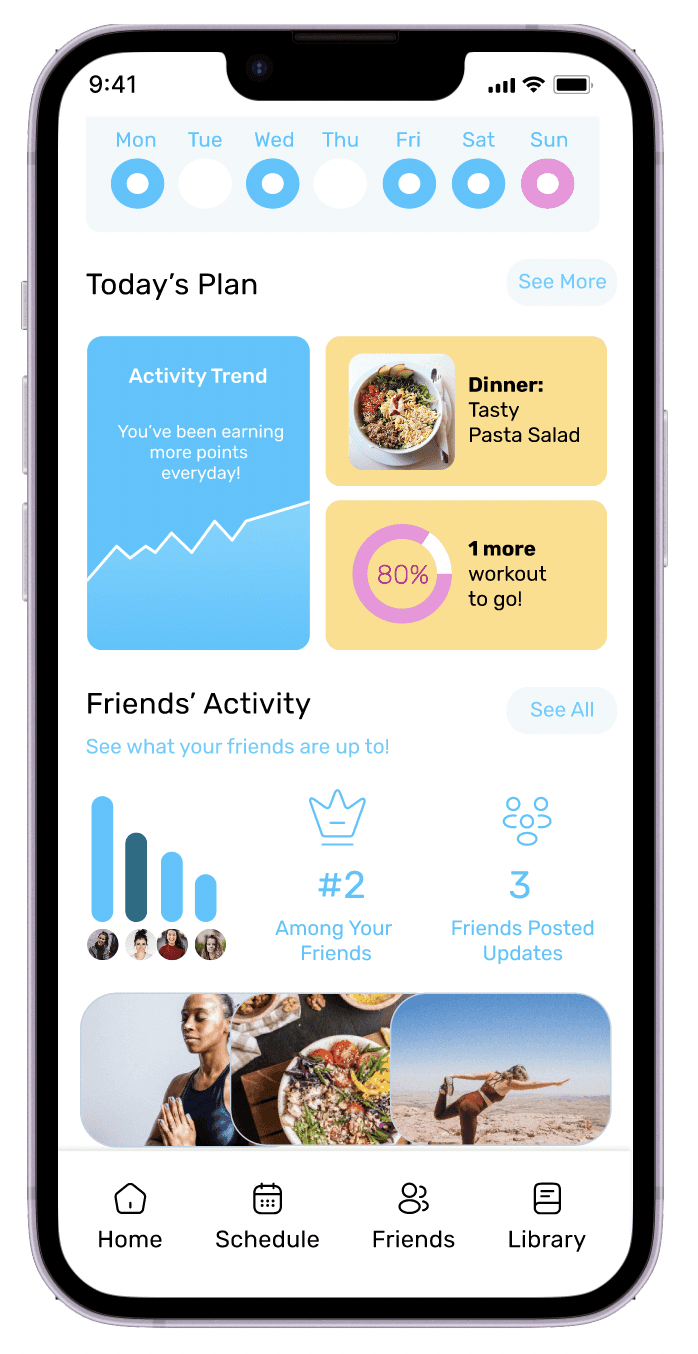
User can view and interact with updates of health and wellness activities posted by friends.
Activity Tracking
User can see a record of all activity tracked on the app in the past.
User Testing
Usability Testing
Primarily to test findability as well as high-fidelity UI choices, through observing user interactions and verbalised thoughts.
Concept Testing
To validate the general concept and fundamental logic and its elements of gamification and social sharing.
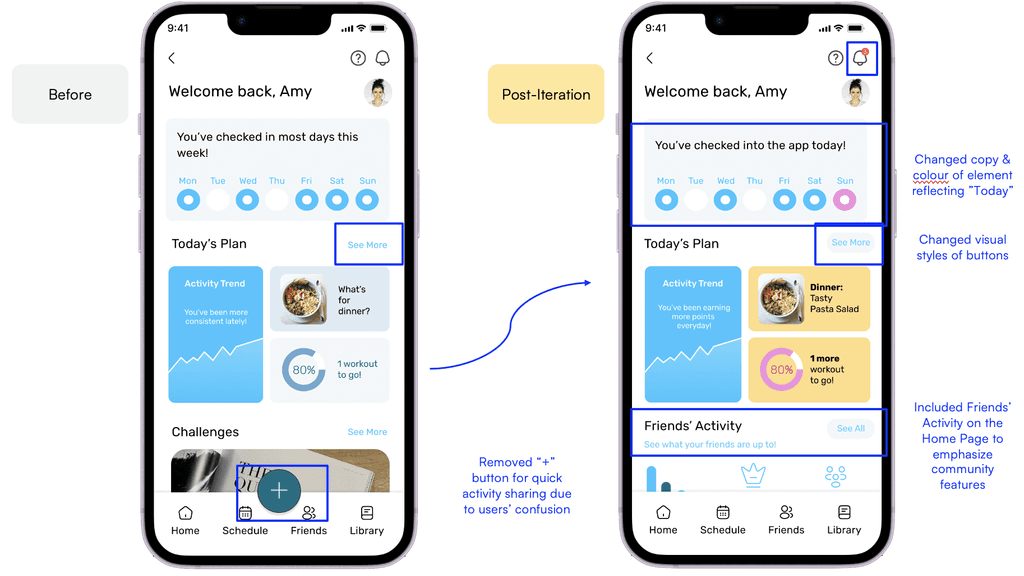
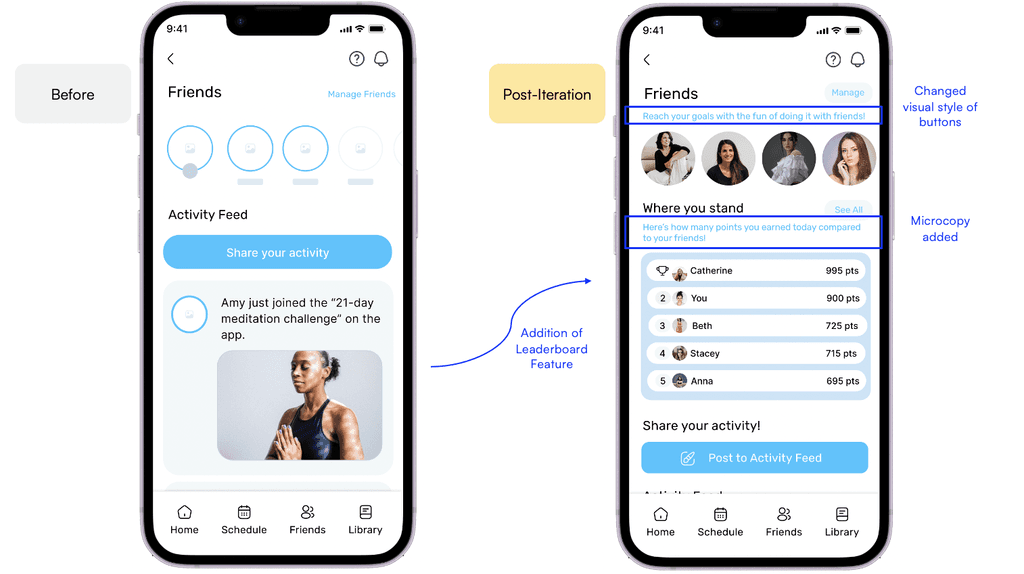
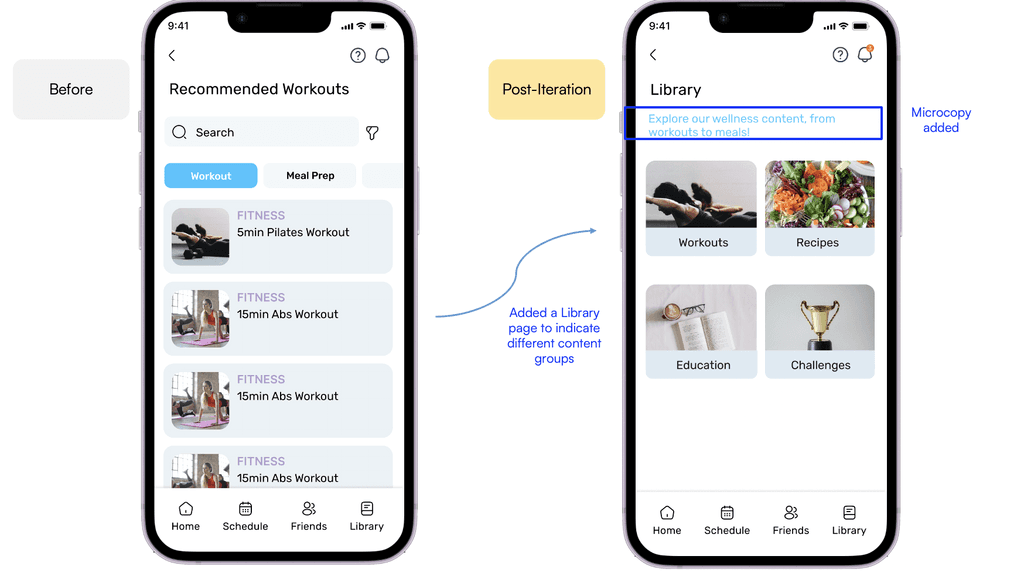
To validate our design decisions, we ensured to conduct user testing at various stages of our prototype with a focus on the most common user flows. Given that we were designing an app from 0 to 1, we also decided to incorporate concept testing.
Task 1
Interact with posts and updates shared by friends on the social activity stream.
Task 4
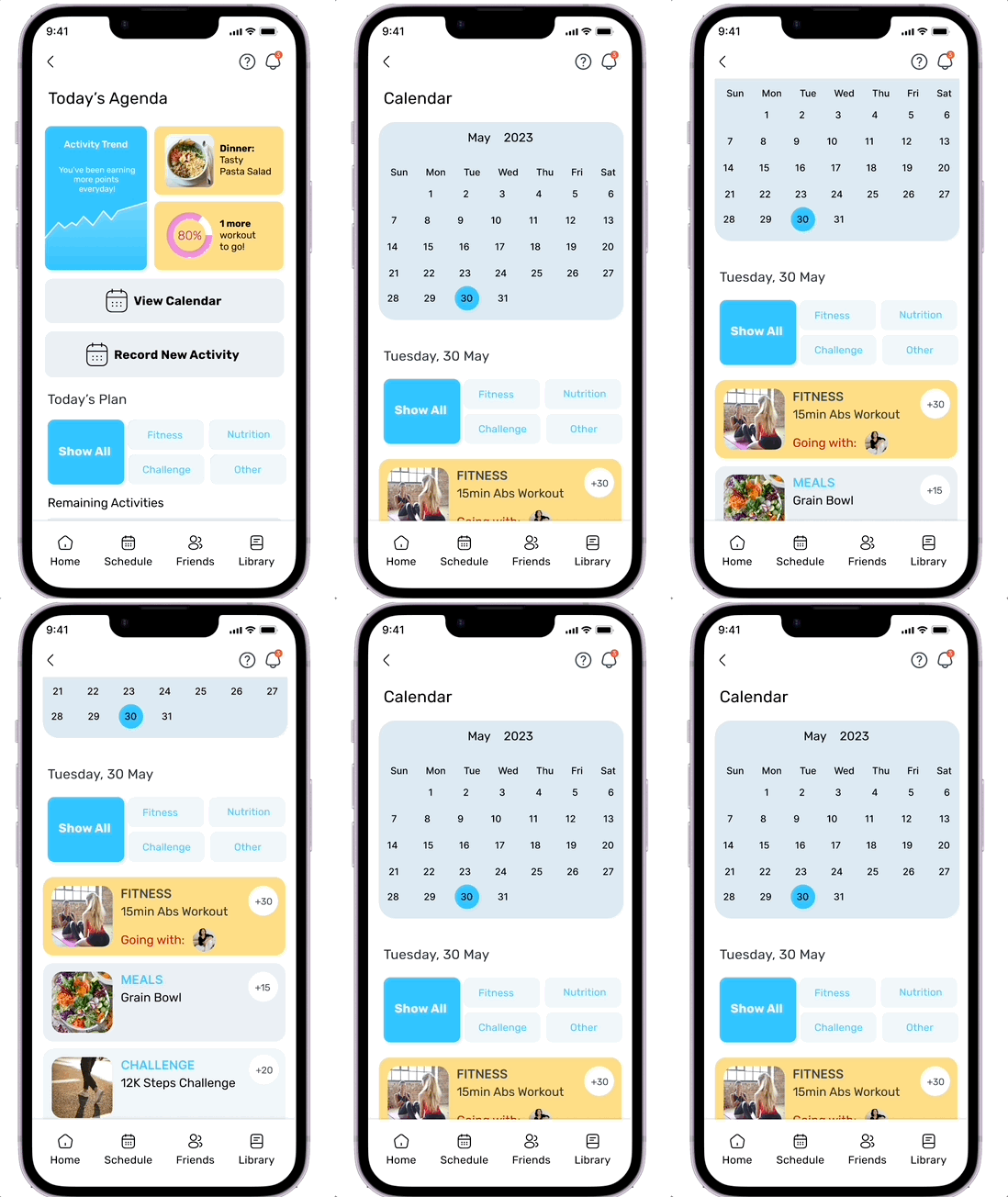
Schedule an activity within the app, such as a short workout video from the app library
Task 2
View an invitation by a friend to join an in-app Challenge, browse details and decide whether to accept the invitation
Task 5
Earn points by sharing an update of a health and wellness activity
Task 3
Access user profile on the app to see history of health and wellness activities tracked using the app
Insights & Iterations